

TravelBox AI Introduces a Redesigned Flight Inventory Manager Experience
Insights | August 4, 2026
Charter flight inventory management is a highly detail-sensitive function within enterprise travel operations.
A date change, a seat release rule, a mismatched booking class, an unlinked inbound flight or a missed allocation limit can quickly affect sales, servicing and profitability. For travel businesses managing large volumes of charter and scheduled flight seats, inventory control is not just about loading flights into a system. It is about knowing what can be sold, who can sell it, when it should be released and how it connects to the wider booking journey.
That pressure is familiar across the charter and leisure aviation space. Some operators manage seasonal flying programmes, others support group travel, ad-hoc charters, specialist routes or holiday-focused flight operations. The models may differ but the operational challenge is often the same: schedules, seats, commitments, release timelines and distribution rules all need to stay aligned from planning to sale.
That is exactly the role of the Flight Inventory Manager (FIM) within TravelBox AI.
TravelBox AI’s Flight Inventory Manager is used to create and manage flight allocations that are made available in the Reservation Manager. It supports core flight inventory functions such as controlling flight availability across distribution channels, managing feeder flights and linked journeys, setting allocation and distribution rules, maintaining schedules and handling actual cost details.
 Diagram note:TravelBox AI’s Flight Inventory Manager bridges seat procurement and retail sales through a centralized flight inventory interface.
Built for Travel Teams Managing Complex Flight Operations
The redesigned Flight Inventory Manager experience in TravelBox AI, is built for travel businesses that handle charter seats, scheduled allocations, group allocations, feeder flights and multi-sector journeys.
It is especially relevant for Tour Operators, Airline Holiday businesses, Travel Agencies, DMCs, Cruise-related Travel Sellers and Enterprise Travel teams managing large volumes of flight seats, because it provides one centralised interface between seat procurement and retail sales.
What Is New in the TravelBox AI Experience?
The latest TravelBox AI Flight Inventory Manager experience brings a clearer, more visual and more connected way to manage flight programs and allocations.
Instead of treating flight inventory as a buried back-office setup, the redesigned experience makes it easier to search, review and act on the information that matters. Teams can search and filter flight programs from one grid using details such as origin, destination, company, division and currency. The new interface also surfaces validity information at a glance, helping users identify contracts that may need attention before they lapse.
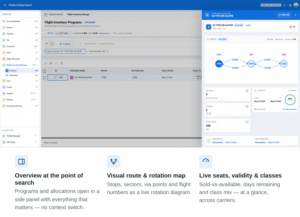 Diagram note:The redesigned interface helps teams search, filter and review flight programs faster.
For a charter-heavy business, this means less time opening records just to understand what is happening and more visibility into everyday decisions: which allocations are valid, which routes may need attention because of low sales, expiring validity or allocation pressure, which seats are available and which contracts need attention before they affect sales or margins.
From Flight Programs to Allocations: A Clearer Operating Model
Flight Inventory Manager works around two important building blocks: flight programs and allocations.
A flight program defines the physical flight details, including schedules, capacity, booking classes, departure and arrival airports, costs and related operational data. Allocations define the segments and seat availability that can be sold through TravelBox AI. These two areas are linked using key parameters such as date, flight number, airline, departure and destination.
This structure gives travel teams the flexibility to manage both the actual flight operation and the commercial allocation of seats.
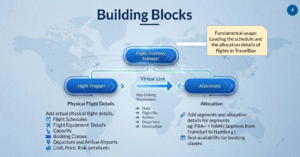 Diagram note:Flight programs and allocations are connected through key parameters such as date, flight number, airline, departure and destination.
That matters because charter operations rarely stay simple. A seasonal programme may need repeated rotations. A group allocation may need a locator or PNR reference. A feeder route may need to draw from a main seat pool. A triangle route may connect three points within one itinerary, allowing multiple sectors to be managed as part of the same routing. TravelBox AI gives teams a structured way to manage these scenarios without losing sight of the commercial seat position.
Easier Management of Selling Segments
Selling segments are central to charter flight inventory management.
In TravelBox AI, a selling segment represents charter or scheduled flight allocations that are ready to be sold through Reservation Manager. When an allocation is received from an airline or charter operator, users can enter supplier details, allocation distribution, flight numbers, departure and arrival destinations and related information to create the selling segment.
The updated TravelBox AI experience makes these concepts easier to work with. Users can manage main selling segments, shared segments, linked flights, flight segments and release rules from a single, structured interface.
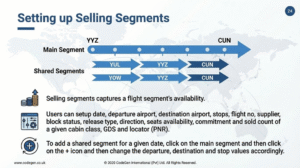 Diagram note:Selling segments capture flight segment availability and support both main and shared segment structures.
Shared segments are particularly useful where a main allocation needs to support feeder routes. For instance, a main sector can be connected with different feeder departure points, allowing the business to control how much of the main seat pool is available for each route.
Better Visibility Across Seats, Classes and Validity
The redesigned interface gives teams a more immediate view of the seat picture.
Product Setup Search provides programme and allocation overviews covering routes, seats and validity without requiring users to open each record individually. It also offers visual route and rotation views alongside live seat availability, validity periods, class mix and sold-versus-available insights across carriers.
That matters because inventory teams often need to make decisions quickly. Is this allocation soft? Are seats selling as expected? Are we holding too much risk? Are certain booking classes performing better than others?
A clearer view helps teams respond before a flight becomes a margin problem.
Distribution Control That Matches Real Business Structures
Once teams have a clearer view of seat availability, the next question is how that inventory is distributed across the business.
Flight inventory is rarely sold through one simple channel, so TravelBox AI supports distribution limits that allow teams to define min and max seat access rules across the business structures that matter, such as duration, company, division, brand, package, client or client group.
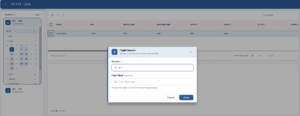 Diagram note:Linked flights help teams connect outbound and inbound selling segments, supporting return journey planning and better itinerary control.
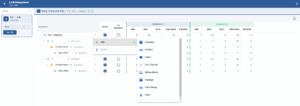
Diagram note:Distribution limits allow teams to control how seats are allocated across business structures such as company, division, brand, package, client and client group.
The latest Flight Inventory Manager messaging also highlights class-level distribution control, where limits can be managed down to the booking-class level and aligned with the way the business actually sells.
What This Means for Enterprise Travel Teams
This development strengthens TravelBox AI by making flight inventory easier to see, easier to control and easier to connect with the wider booking journey.
Flight Inventory Manager makes approved allocations available to Reservation Manager, works with Fares Manager for pricing and fare rules, links inbound and outbound journeys and supports GDS-based flight details where configured.
For enterprise travel teams, the value is not only in managing charter inventory. It is in helping every team involved, from product and contracting to reservations and operations, work from a clearer view of what is available, what is committed and what needs attention.
Key Benefits
With the redesigned Flight Inventory Manager experience, travel teams can benefit from:
- Faster flight allocation management, helping teams set up and review flight inventory with less manual effort.
- Improved visibility across inventory and validity periods, so teams can identify active, expiring or at-risk allocations more easily.
- Better control over seat commitments and release rules, supporting more structured inventory decisions.
- Simplified management of linked journeys and feeder routes, helping teams connect outbound and inbound journeys with greater clarity.
- Enhanced distribution control across brands and business units, making it easier to manage who can access which seats.
In practical terms, this supports faster setup, fewer errors, better visibility, reduced operational risk and improved productivity across charter flight inventory workflows.
What if your charter flight inventory helped teams move forward with clarity from the start, instead of creating extra checks and follow-ups later?
With the new TravelBox AI Flight Inventory Manager experience, CodeGen is continuing to modernise the way enterprise travel businesses manage complex flight inventory.
Ready to bring more control, visibility and efficiency to your charter flight inventory operations?
Contact the TravelBox AI team at sales@codegen.co.uk to explore how we can support your flight inventory strategy and visit www.travelbox.ai to learn more about the platform.